


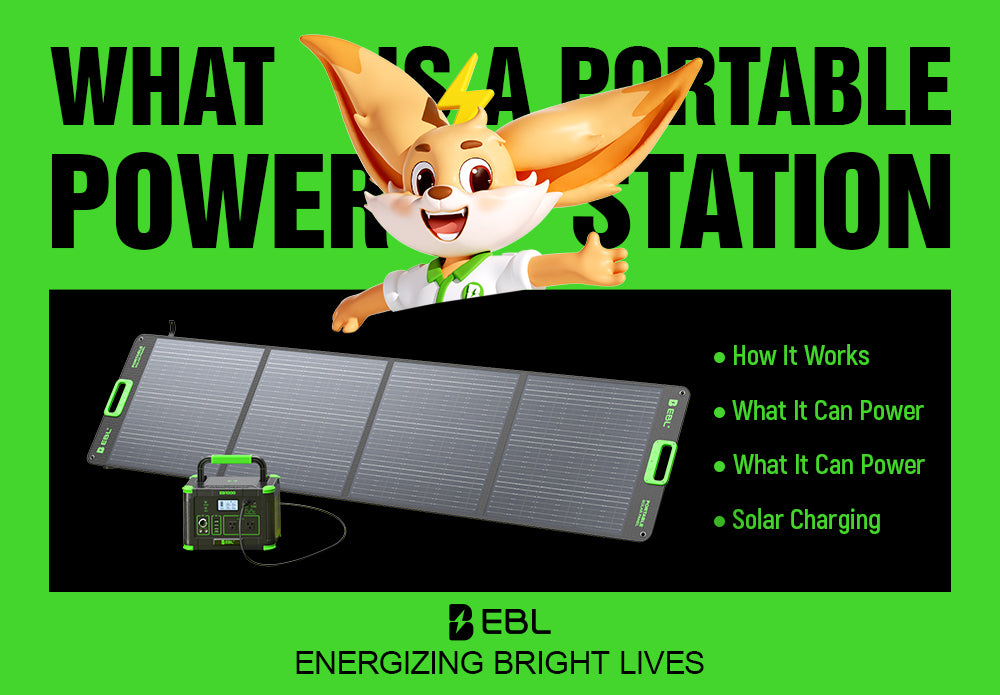
A portable power station is a rechargeable battery-powered device that stores electricity and supplies power to phones, laptops, lights, refrigerators, CPAP machines, small appliances, and other electronics when a wall outlet is unavailable. Unlike fuel generators, portable power stations run on stored battery energy and can usually be recharged from a wall outlet, car charger, or compatible solar panels.
What Is a Portable Power Station?
A portable power station is essentially a large rechargeable battery combined with an inverter, charging system, and multiple output ports in one portable unit.
Instead of producing electricity by burning gasoline or propane, it stores electrical energy in an internal battery. When you connect a device, the power station converts that stored energy into the type of electricity the device needs.
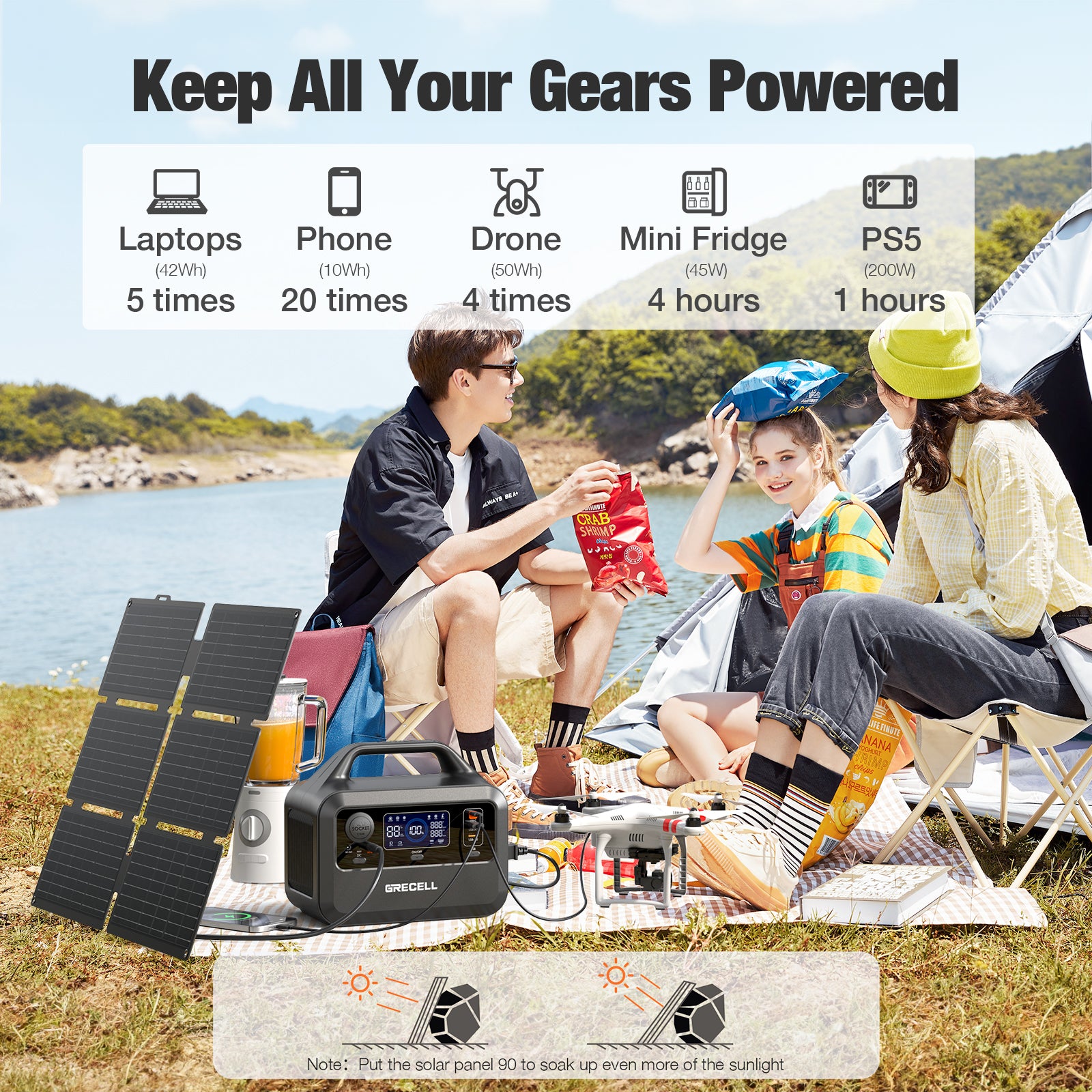
This makes portable power stations particularly useful for camping and outdoor trips, RV travel, emergency power, home backup, off-grid living, remote work, and power outages.
How Does a Portable Power Station Work?
A portable power station works through four main components: Battery → Power Management System → Inverter → Your Devices.
Battery Storage
The battery determines how much energy the power station can store. Battery capacity is normally measured in watt-hours (Wh). A larger Wh rating generally means the power station can operate the same device for longer.
Inverter
Most household appliances use AC electricity, while batteries store DC electricity. The inverter converts DC battery power into AC electricity.
Charging System
Depending on the model, common charging methods include an AC wall outlet, compatible solar panel, car charging, and USB-C charging.
Output Ports
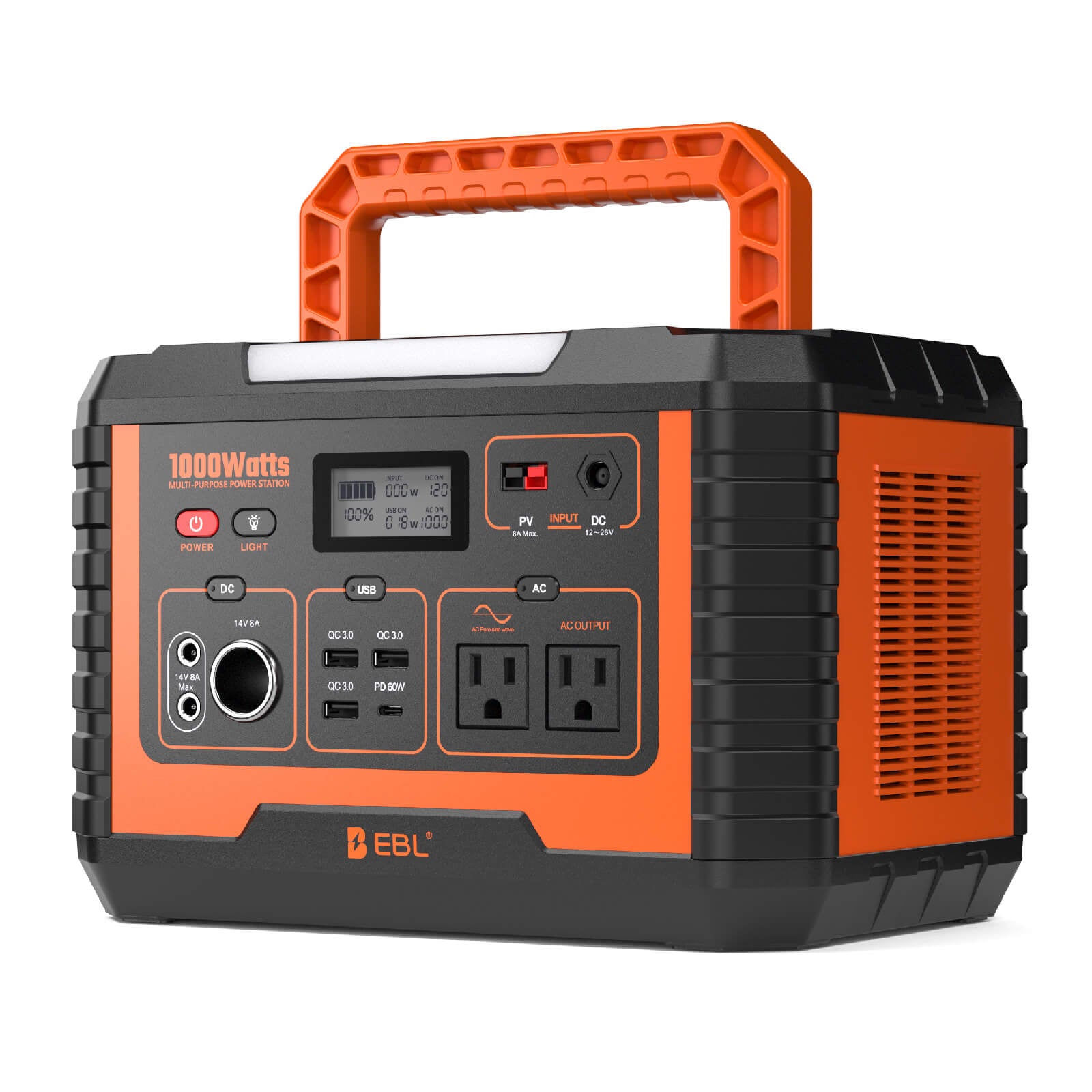
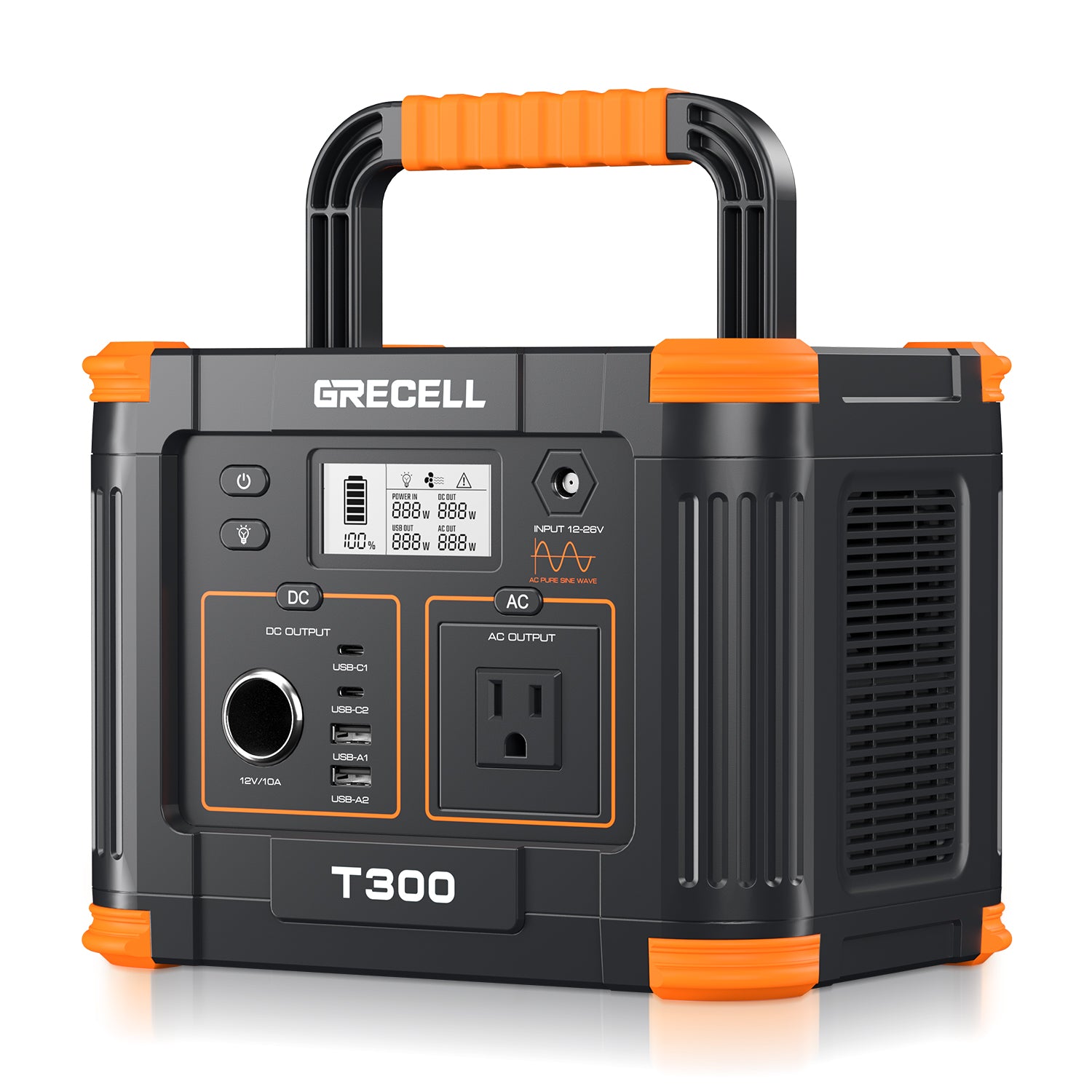
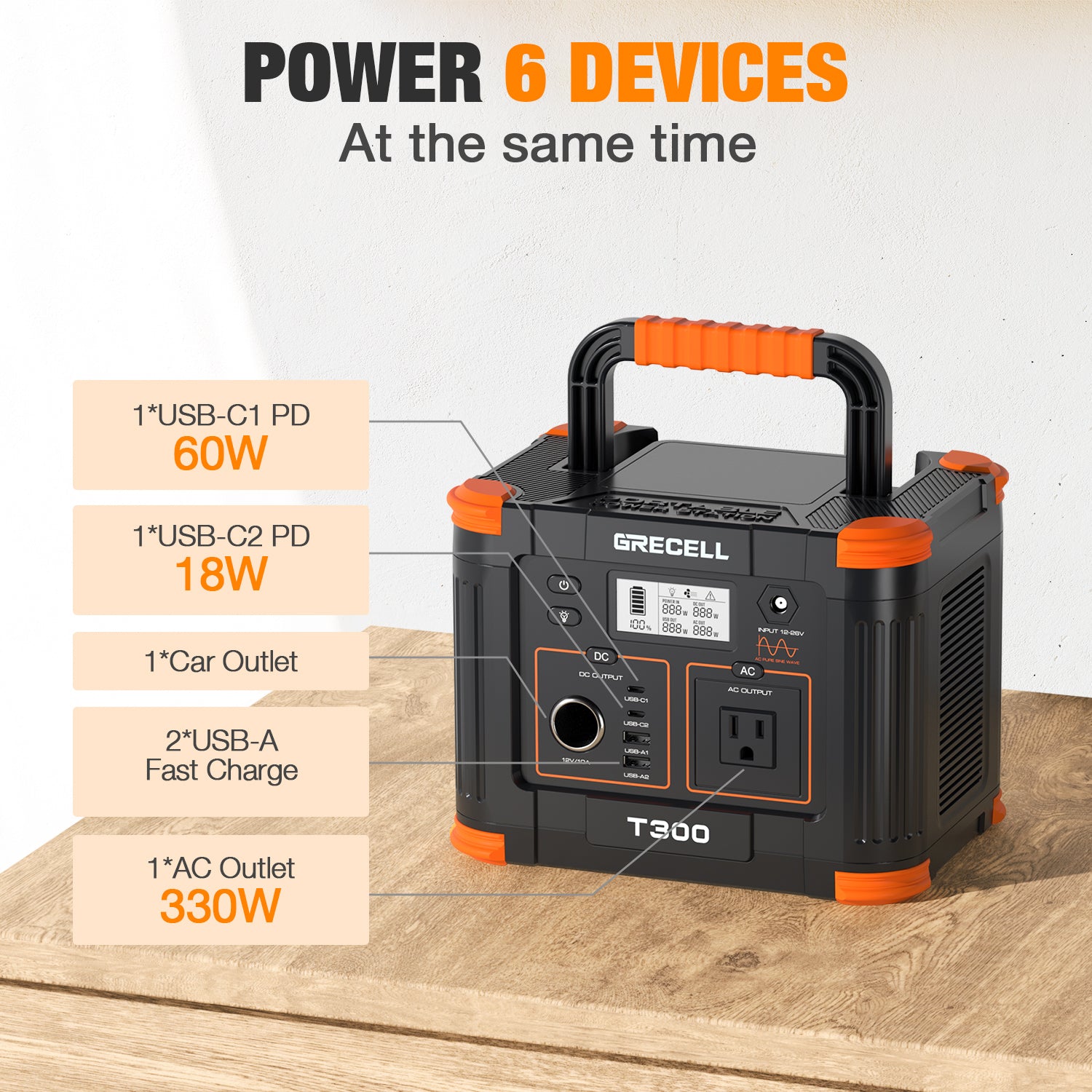
Portable power stations can include AC outlets, USB-A ports, USB-C ports, DC outputs, and car-style 12V outlets.
What Can a Portable Power Station Run?
A portable power station can run many common electronics and appliances as long as the device's power requirement stays within the power station's output limit.
| Device | Typical Power Use | Suggested Power Station |
|---|---|---|
| Smartphone | 5–20W | 500W |
| LED Light | 5–15W | 500W |
| Wi-Fi Router | 10–20W | 500W |
| Laptop | 40–100W | 500W |
| TV | 60–150W | 500W+ |
| Refrigerator | 100–400W | 1000W+ |
| Microwave | 600–1500W | 1000W–2400W |
| Electric Kettle | 1000–1500W | 2400W |
How Long Will a Portable Power Station Last?
Runtime depends primarily on battery capacity, device power consumption, and conversion losses.
Portable Power Station Runtime Formula
Estimated Runtime = Battery Capacity (Wh) × 0.85 ÷ Device Wattage (W)
For example, a 1000Wh battery powering a 100W device gives an estimated runtime of approximately 8.5 hours under simplified conditions.
Portable Power Station vs. Generator: What’s the Difference?
A traditional generator produces electricity by burning fuel, while a portable power station stores electricity in a rechargeable battery. Portable power stations are especially useful when quiet operation, simple setup, and fuel-free operation are priorities.
What Size Portable Power Station Do You Need?
A simple starting decision model is: Camping → 500W; RV / Road Trips → 1000W; Home Backup / High-Power Appliances → 2400W.
500W Portable Power Station: Best for Camping
A 500W portable power station is a practical choice for phones, cameras, laptops, LED lights, fans, small TVs, and small camping appliances.
For users with similar requirements, the EBL 500W Portable Power Station can fit naturally into a lightweight camping power setup.
1000W Portable Power Station: Best for RV and Longer Trips
Moving to the 1000W class gives users more flexibility for portable refrigerators, TVs, laptops, fans, lighting, and selected small kitchen appliances.
The EBL 1000W Portable Power Station is suited to more demanding RV, road-trip, and longer outdoor power setups.

2400W Portable Power Station: Best for Home Backup
Home backup may involve a refrigerator, freezer, Wi-Fi router, lights, TV, laptops, and selected kitchen appliances. A higher-output solution such as the EBL 2400W Portable Power Station provides more flexibility for larger loads and higher-power backup applications.

A Better Way to Choose: The 20% Headroom Rule
For basic planning, use: Recommended Output ≥ Expected Maximum Load × 1.2. For appliances with motors, compressors, pumps, or heating elements, check their specific surge requirements.
Watts vs. Watt-Hours: Don't Confuse Them
W = Can it run the device?
Wh = How long can it run the device?
You need to consider both before choosing a portable power station.
Can You Charge a Portable Power Station With Solar Panels?
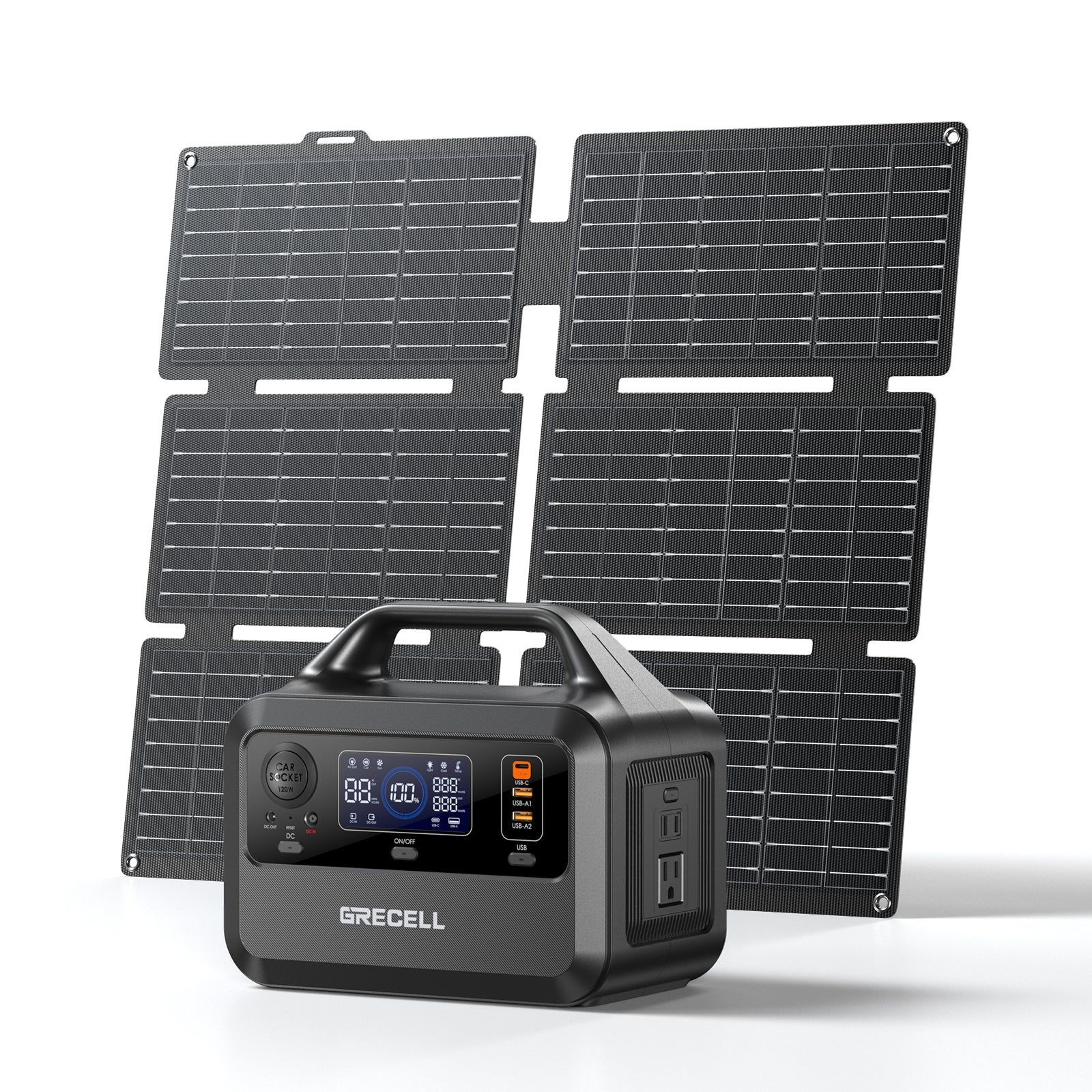
Yes. Many portable power stations can be charged using compatible solar panels, creating a useful setup for camping, RV travel, emergencies, and off-grid applications.
The basic system is: Solar Panel → Portable Power Station → Your Devices.
100W vs. 200W Solar Panel
| Solar Panel | Best For | Main Advantage |
|---|---|---|
| EBL 100W Solar Panel | Camping / Light Use | Easier portability |
| EBL 200W Solar Panel | RV / Larger Power Stations | More charging potential |
Solar charging time depends on available sunlight, panel angle, weather, panel output, power station capacity, and charging controller limits.


Solar Charging Estimate
Charging Time ≈ Battery Capacity ÷ Effective Solar Input
If a 500Wh battery receives an average effective input of 80W, the simplified estimate is 500Wh ÷ 80W = 6.25 strong-sun hours.
When Is a Portable Power Station Worth Having?
A portable power station is particularly useful for camping, RV travel, home power outages, emergency preparedness, and off-grid power. When combined with compatible solar panels, it can store solar-generated electricity for use when sunlight is unavailable.
How to Choose a Portable Power Station
Start by listing your devices, finding their wattage, calculating maximum simultaneous load, adding output headroom, and calculating required battery capacity.
Required Energy (Wh) = Device Wattage × Runtime
EBL Portable Power Station Selection Model
| Primary Use | Typical Devices | Starting Power Class |
|---|---|---|
| Camping | Phone, laptop, lights, fan | 500W |
| RV | Refrigerator, TV, electronics | 1000W |
| Home Backup | Multiple appliances | 2400W |
FAQ
What is a portable power station used for?
A portable power station stores electricity in a rechargeable battery and provides power for electronics and compatible appliances when a normal wall outlet is unavailable.
Can a portable power station run a refrigerator?
Yes, many portable power stations can run refrigerators, provided the station supports both normal operating wattage and startup surge.
How long will a 1000W portable power station last?
The 1000W rating alone cannot determine runtime because it describes output power, not battery capacity. Check the Wh rating and device load to estimate runtime.
Can you charge a portable power station with solar panels?
Yes, if the power station supports solar input and the panel meets its input specifications. Consider the EBL 100W Solar Panel for lighter portable setups or the EBL 200W Solar Panel for greater charging potential.
What size portable power station do I need for camping?
For phones, laptops, cameras, lights, and small fans, a 500W-class portable power station is often a practical starting point.
Find the Right Portable Power Station for Your Needs
Whether you need portable power for camping, RV travel, emergency preparedness, or home backup, start by calculating the wattage and runtime of the devices you want to support.
Explore the EBL 500W Portable Power Station, EBL 1000W Portable Power Station, and EBL 2400W Portable Power Station, and pair your setup with a compatible 100W Solar Panel or 200W Solar Panel when solar recharging is part of your setup.

Leave a comment
All comments are moderated before being published.
This site is protected by hCaptcha and the hCaptcha Privacy Policy and Terms of Service apply.