
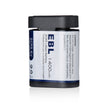
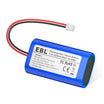
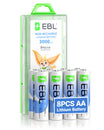

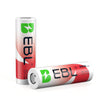
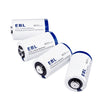
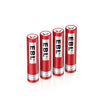
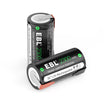
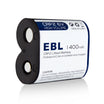
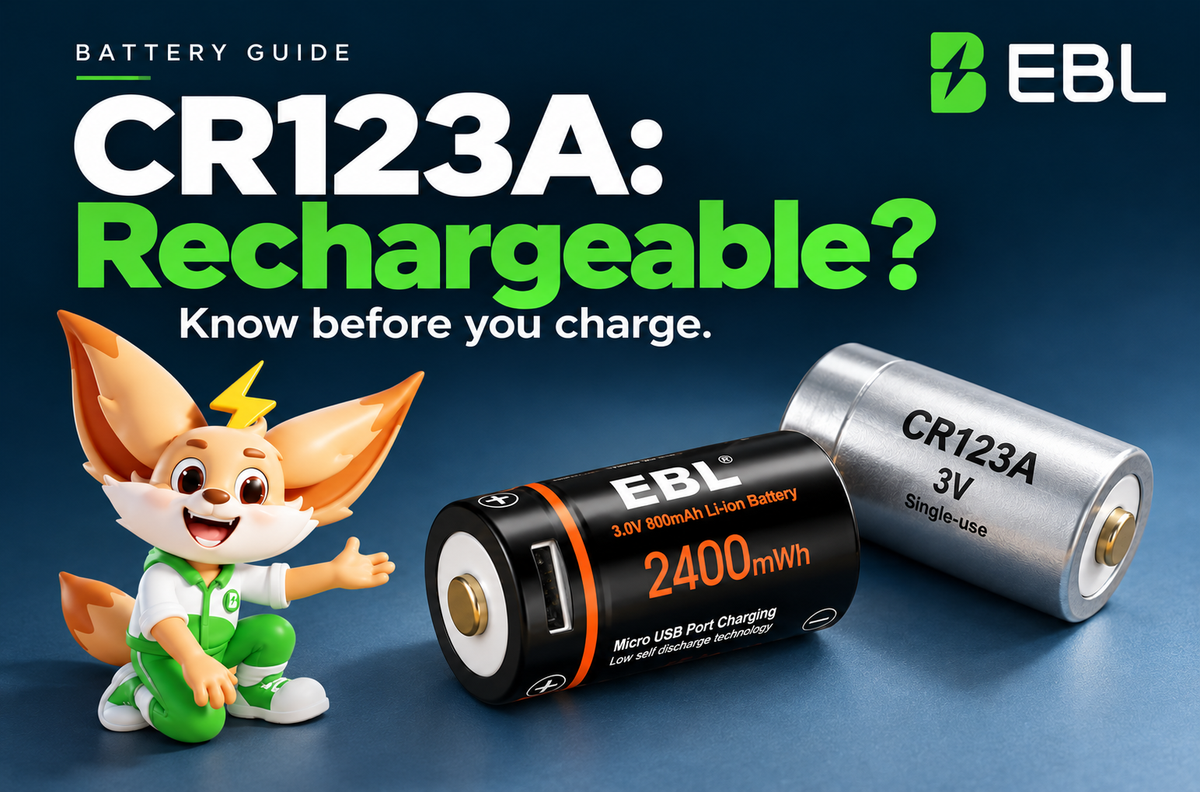
Are CR123A batteries rechargeable? Standard CR123A lithium batteries are single-use and must not be recharged. Rechargeable alternatives are sold in a similar size, including regulated 3V batteries and higher-voltage RCR123A/16340 lithium-ion batteries. Before buying or charging one, check the battery label, the device's approved battery types and voltage range, and the specified charging method. A battery that fits the compartment is not necessarily electrically compatible.
Are CR123A batteries rechargeable or single-use?
A standard CR123A is a compact, cylindrical, primary lithium battery with a nominal voltage of 3V. “Primary” means single-use. Products marketed as rechargeable CR123A batteries are separately designed rechargeable alternatives; the familiar name does not make an ordinary CR123A rechargeable. The label and the manufacturer's instructions determine which type you have.
Look for an explicit “rechargeable” marking and instructions for the exact model. If the label says “do not recharge,” follow it. If the label is damaged or unreadable, do not try charging the battery to identify it. Replace it with a documented, approved battery.
For reference, Panasonic identifies its CR123A as a 3V primary lithium battery. That classification describes the conventional cell, not every rechargeable product advertised as a CR123A replacement.
How do CR123A and rechargeable CR123A batteries differ?
The important differences are rechargeability, voltage, and charging requirements. A primary CR123A cannot be charged. A regulated rechargeable 3V alternative is designed to provide a specified output through its internal electronics. Many conventional RCR123A/16340 lithium-ion cells have a higher nominal voltage. Similar names and dimensions do not establish interchangeability.

| Battery type | Rechargeable? | Nominal voltage / output | Charging method | Compatibility decision |
|---|---|---|---|---|
| Standard primary CR123A | No | 3V nominal | Do not charge | Use where the device specifies primary CR123A batteries. |
| Regulated rechargeable 3V alternative | Yes, when labeled rechargeable | 3V specified output; verify the model | Built-in USB or another method explicitly approved for that model | Confirm rechargeable batteries, output limits, current capability, and physical fit. |
| Conventional RCR123A / 16340 Li-ion | Yes | Commonly 3.6V or 3.7V nominal; check full-charge voltage | Approved Li-ion charger or built-in USB, if specified | Use only when the device explicitly supports this battery and its full voltage range. |
“RCR123A” is not a complete electrical specification. Rechargeable products can use different chemistries or regulation circuits, so read the actual voltage and charging instructions rather than treating the prefix as a compatibility guarantee. Our CR123A and RCR123A comparison provides additional terminology; the exact battery label and device manual remain decisive.
Can a 3.7V rechargeable battery replace a 3V CR123A?
Only if the device manufacturer explicitly permits that battery type and its full operating voltage range. A 3.7V nominal rating is higher than 3V, and nominal voltage is not the maximum voltage after charging. A regulated 3V alternative avoids that particular nominal-voltage mismatch, but still needs approval for current demand, fit, and rechargeable use.
Check the complete battery arrangement
Do not assume that two batteries sit electrically in parallel just because they sit side by side. In a series arrangement, their voltages add. As a nominal-voltage illustration, two 3V cells total 6V, while two 3.7V cells total 7.4V. These calculations explain why a substitution matters; they do not establish safe operating limits.
Find the approved battery designation and maximum input voltage in the device manual. If the manual only says “CR123A” and does not address rechargeable alternatives, ask the device manufacturer before switching. Do not experiment with a partially charged higher-voltage cell as a workaround.
Check size, contacts, and current demand
A charging port or protection circuit can change a rechargeable battery's dimensions. Compare the manufacturer's diameter and length with the compartment specification and the old battery. The cover should close normally, without compressed springs or forced pressure. Our guide to lithium-ion battery sizes explains why size names alone are not enough.
Also check both continuous and peak current requirements. A camera's activity burst or a flashlight's highest output mode can demand more than its idle state. A protection circuit does not increase the battery's usable current rating or make an unsupported device compatible.
What should you check before buying a rechargeable replacement?
Use the device manual as the starting point, then compare the exact replacement battery against it. Buying decisions need more than matching “CR123A” on two labels. Confirm rechargeability, the permitted voltage range, dimensions, contacts, current capability, and the charging method. If any required specification is missing, get confirmation before buying.
| Check | Why it matters | What to confirm |
|---|---|---|
| Device approval | Some devices restrict rechargeable replacements. | Exact device model and manufacturer-approved battery types. |
| Voltage | Nominal and maximum voltage are different checks. | Battery output range and the device's allowed input range. |
| Physical fit | Ports and circuitry can change dimensions. | Actual diameter, length, terminal shape, and normal cover closure. |
| Current capability | Startup and peak loads can exceed steady demand. | Continuous and peak ratings for both battery and device. |
| Charging method | A charger that fits can still be incompatible. | Approved USB input or exact external charger compatibility. |
| Matched set | Mixed batteries behave differently under load. | Same approved model and type, replaced or charged together as instructed. |
For a quick purchase check: identify the device model, read its approved battery list, compare electrical ratings, check dimensions, and confirm charging instructions. Stop at any unresolved mismatch. Never remove protection parts, alter contacts, or force a battery into place.
How do you charge rechargeable CR123A batteries safely?
Charge only batteries explicitly labeled rechargeable, using the method specified for that exact model. Some have a built-in Micro-USB or USB-C port; others require a compatible external charger. The port shape and battery size are not enough to choose a charger. Ordinary primary CR123A batteries must never be placed on charge.
Built-in USB charging
Remove the batteries from the device unless its manufacturer explicitly authorizes in-device charging. Connect the specified cable and an approved power source to the battery's charging port. Follow the battery's indicator instructions and disconnect after charging. A USB port on the camera or flashlight does not prove that it can charge removable CR123A batteries.

External chargers
Check the charger's supported chemistry, charging voltage, and battery models. A slot labeled “16340” does not automatically support a regulated 3V USB battery. Do not use a NiMH-only charger for lithium-ion batteries. If a battery's instructions only specify its built-in USB charging method, use that method unless the manufacturer confirms another option.
Before and during charging
- Inspect the battery, cable, and port. Stop using batteries with damaged wrapping, swelling, leakage, or other damage.
- Let a battery that became hot during use cool before charging.
- Charge in a dry location within the manufacturer's temperature limits, away from combustible materials and children.
- Do not leave charging batteries unattended or continue charging if there is unusual heat, odor, or deformation.
- Store spare batteries in a protective case so their terminals cannot contact keys, coins, or one another.
Energizer's battery-care guidance also emphasizes charging only batteries marked rechargeable and using a charger designed for the battery type.
Which devices can use rechargeable CR123A batteries?
Rechargeable CR123A alternatives can be considered for cameras, flashlights, and security devices only when the specific model permits them. A broad device category cannot establish compatibility. Check the manufacturer's approved battery list, voltage limits, and charging restrictions, then confirm that the replacement can supply the device's operating and peak current.
A frequently used flashlight
For a flashlight used every evening, rechargeability may reduce repeated disposable purchases. First confirm whether its manual permits regulated 3V replacements or conventional RCR123A cells. Check every intended brightness mode against the battery's current rating. Do not assume that a battery suitable for an LED model is suitable for an older incandescent model.
A security camera
Find the model number before buying. Arlo's battery guidance, for example, identifies a specific approved rechargeable option for the original VMC3030; this is not blanket approval for any rechargeable CR123A. A seller's general “camera compatible” claim does not override the device manufacturer's restrictions.
A sensor or emergency device
If a sensor specifies primary CR123A batteries, keep using that approved type until the manufacturer confirms a rechargeable option. Ask whether a different discharge profile affects low-battery alerts and replacement intervals. For a device relied on during an emergency, follow its maintenance schedule rather than assuming rechargeable and disposable batteries behave identically.
When is the EBL rechargeable CR123A a suitable option?
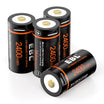
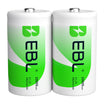
The EBL 3V rechargeable CR123A four-pack, SKU TB-1445, is a candidate when your device permits a rechargeable 3V replacement and its fit and current requirements are confirmed. The official listing specifies 2400mWh energy capacity and built-in Micro-USB charging. Those features support a reusable charging routine; they do not establish universal device compatibility.
Choose it when the device's approved requirements match the exact battery specifications and you prefer charging through the battery's own port. It is not an automatic substitute for a device requiring a different voltage, a proprietary battery pack, or a primary-only battery. For demanding loads, confirm the applicable current rating with EBL before ordering.
How should you compare capacity and runtime?
Compare energy and operating conditions, not just mAh. A milliamp-hour rating measures charge; watt-hours also account for voltage. For a regulated battery, check whether the rating describes the internal cell or the usable output before comparing it with another product.
- Energy in Wh = voltage × capacity in Ah.
- Wh = mWh ÷ 1,000.
- Estimated runtime in hours = usable energy in Wh ÷ average device power in W.
TB-1445's listed 2400mWh converts to 2.4Wh. This is a unit conversion, not a measured runtime or a guarantee of delivered energy. Actual runtime depends on conversion efficiency, discharge current, temperature, device cutoff voltage, and usage pattern. Without reliable usable-energy and average-power measurements, a specific hours-per-charge claim would be misleading.
A simple selection rule
- Primary CR123A required: choose the approved disposable battery.
- Rechargeable 3V allowed: compare regulated 3V options, then verify fit and current capability.
- RCR123A/16340 explicitly supported: match the manufacturer's stated voltage range and charging requirements.
- Requirements unclear: ask the device manufacturer before substituting.
For a related example of why chemistry names alone are insufficient, read about rechargeable lithium AA and AAA batteries. Battery size and electrical requirements must always be evaluated together.
Frequently asked questions
Can I recharge the CR123A batteries that came with my device?
Only if those exact batteries are explicitly labeled rechargeable and have manufacturer-provided charging instructions. Standard primary CR123A batteries must not be charged, even if they fit a charger. If the label is missing or unclear, replace them with the device manufacturer's approved battery instead of experimenting.
Are CR123A and RCR123A batteries the same size?
They can be similar in size, but exact dimensions vary by product. Added protection circuitry or a charging port can affect length and fit. Compare the actual battery dimensions, terminal shape, and compartment requirements. Even a perfect physical fit does not confirm that the voltage or current capability is suitable.
Is every rechargeable CR123A battery 3.7V?
No. Many conventional RCR123A or 16340 lithium-ion cells are rated at 3.6V or 3.7V nominal, while some rechargeable alternatives provide regulated 3V output. Other designs also exist. Read the exact battery's output specifications and charging instructions, then compare them with the device's approved battery types and voltage range.
Can I use a regular battery charger for rechargeable CR123A batteries?
Only when the charger explicitly supports that exact battery type and charging requirements. Physical fit does not prove compatibility. A NiMH-only charger is unsuitable for lithium-ion batteries, and a conventional 16340 charger is not automatically suitable for a regulated 3V USB battery. Follow the battery manufacturer's specified charging method.
Do rechargeable CR123A batteries last longer than disposable ones?
Not necessarily on a single charge. Runtime depends on usable energy, load, temperature, and the device's cutoff behavior. Rechargeability allows repeated use, but does not guarantee more hours per charge than a primary battery. Compare documented energy ratings and relevant operating conditions rather than assuming a higher mAh number wins.
Can I mix rechargeable and disposable CR123A batteries?
No. Do not mix rechargeable and disposable cells, different battery types, or old and new batteries in the same device. Use a matched set of the approved model and follow the manufacturer's replacement and charging instructions. Similar appearance or nominal voltage does not make a mixed set suitable.
Ready to compare a rechargeable option? Check your device's approved battery requirements, then review the EBL rechargeable CR123A specifications. Confirm compatibility before switching.

Leave a comment
All comments are moderated before being published.
This site is protected by hCaptcha and the hCaptcha Privacy Policy and Terms of Service apply.