
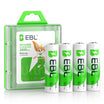
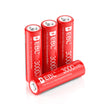
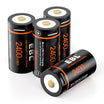
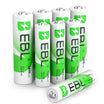
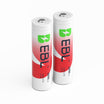
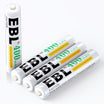
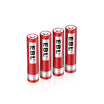
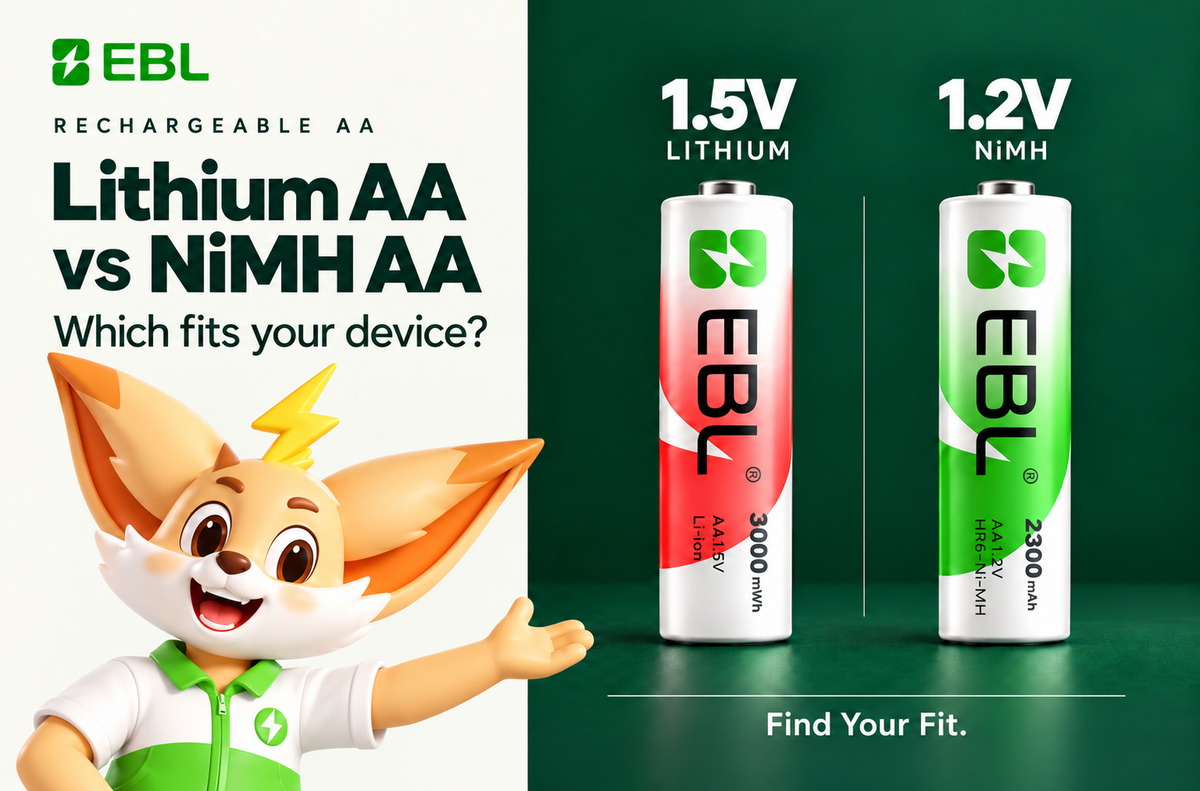
For lithium AA vs NiMH AA batteries, start with a simple rule: keep using NiMH if your device supports it and works well. Consider rechargeable 1.5V lithium AA when your device allows it and needs a higher operating voltage than 1.2V NiMH provides. Neither type automatically lasts longer. If the manual requires disposable batteries, use the specified type. Rechargeable lithium also needs a compatible charging system.
- NiMH already works well? You may not need to switch.
- Need steady 1.5V? Consider rechargeable lithium if your device approves it.
- Manual says alkaline or non-rechargeable lithium? Follow that requirement.
What Is the Main Difference?
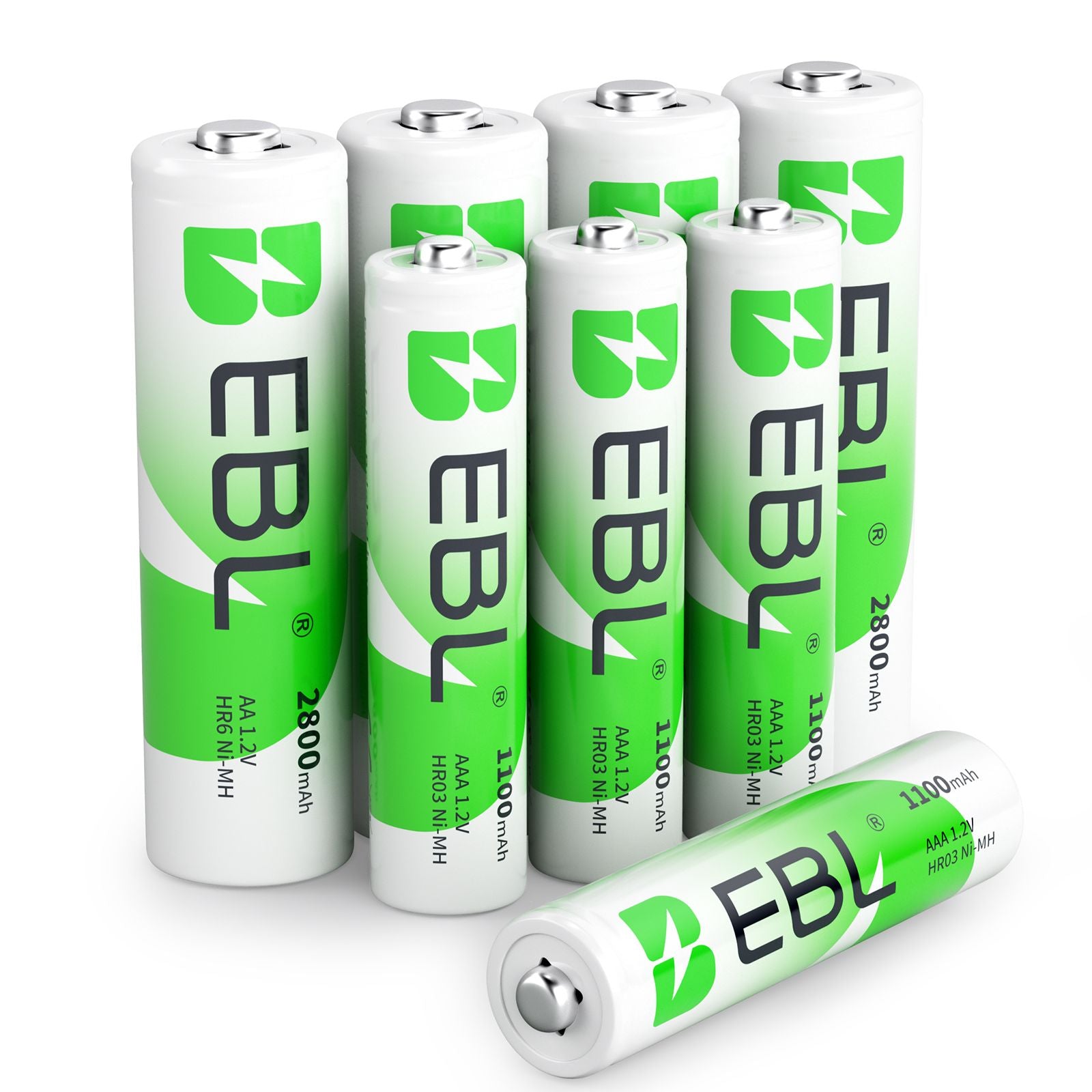
The main difference is the voltage supplied to your device. Rechargeable lithium AA batteries use internal electronics to provide about 1.5V. NiMH, short for nickel-metal hydride, provides a nominal 1.2V. Both are rechargeable, but they need charging systems designed for their battery type.
| What matters | 1.5V rechargeable lithium AA | 1.2V NiMH AA |
|---|---|---|
| Voltage | Electronics keep output near 1.5V during normal use | Operates around a 1.2V nominal level |
| When to consider it | An approved device needs a steady 1.5V supply | Your device accepts NiMH and runs well on it |
| Runtime | Depends on usable energy and the device | Depends on usable energy and the device |
| Charging | Charger approved for the exact 1.5V lithium model | Compatible NiMH charger |
| Upfront spending | Include a compatible charger if you need one | An existing compatible charger can reduce extra spending |
1.2V does not mean “nearly empty.” It is NiMH's normal voltage rating. NiMH also has a relatively steady voltage during much of its discharge, as explained in Energizer's NiMH handbook. Higher voltage is useful only when your device needs and supports it.
For a closer look at the technology, see how 1.5V rechargeable lithium AA and AAA batteries work.

Which One Lasts Longer?
Neither type always wins. Runtime depends on how much energy the device can use before it stops working. A device that needs a higher voltage may stop early on NiMH. A device designed for NiMH may use that battery effectively. Constant 1.5V alone does not guarantee longer runtime.
Watch the units on the package: 3000mWh and 2500mAh are not directly comparable. mWh measures energy; mAh measures electric charge. You need the voltage and rating conditions to compare them properly.
The simple energy conversion is Wh = mWh ÷ 1,000. For example, 3000mWh equals 3Wh of rated energy. That figure alone does not tell you how many hours a camera or controller will run.
Actual runtime also depends on power-conversion losses, current draw, temperature, the voltage at which the device shuts off, and how you use it. Look for results from the same device and settings before trusting a “lasts longer” claim.

Which Type Fits Your Device?
Start with the battery section of your device manual. Look for the permitted chemistry, not just the letters “AA.” Then match your use case below. Device categories are a starting point; a specific model can have different requirements from another camera, controller, or lock.
| Your device | Starting point | One important check |
|---|---|---|
| Remote or game controller | NiMH is an option if the manual supports it | A USB port does not necessarily charge loose AA cells |
| Motorized toy or AA-powered camera | Either rechargeable type, if approved | Battery current capability must meet motor startup or flash-charging demand |
| Smart lock or security camera | Use the exact battery type specified | Some models require disposable batteries |
Blink example: Blink specifies non-rechargeable 1.5V lithium AA batteries for models including Outdoor 4. Rechargeable lithium AA is not an approved substitute for those models simply because it is also labeled 1.5V.
If the manual is unclear, send the manufacturer your device model and the proposed battery model before buying.
Which Costs Less Over Time?
Compare the cost of a complete usable set: batteries plus any charger you need. If you already own a compatible NiMH charger, staying with NiMH avoids buying another charging system. If you need approved 1.5V lithium batteries, compare kits that include a suitable charger.
Do not base the decision only on an advertised recharge count. Cycle claims depend on test conditions and how much capacity remains at the end. Real value comes from how often you reuse the batteries and how well they serve your device.
For the broader purchase decision, see our rechargeable versus disposable battery comparison.
Do You Need a Different Charger?
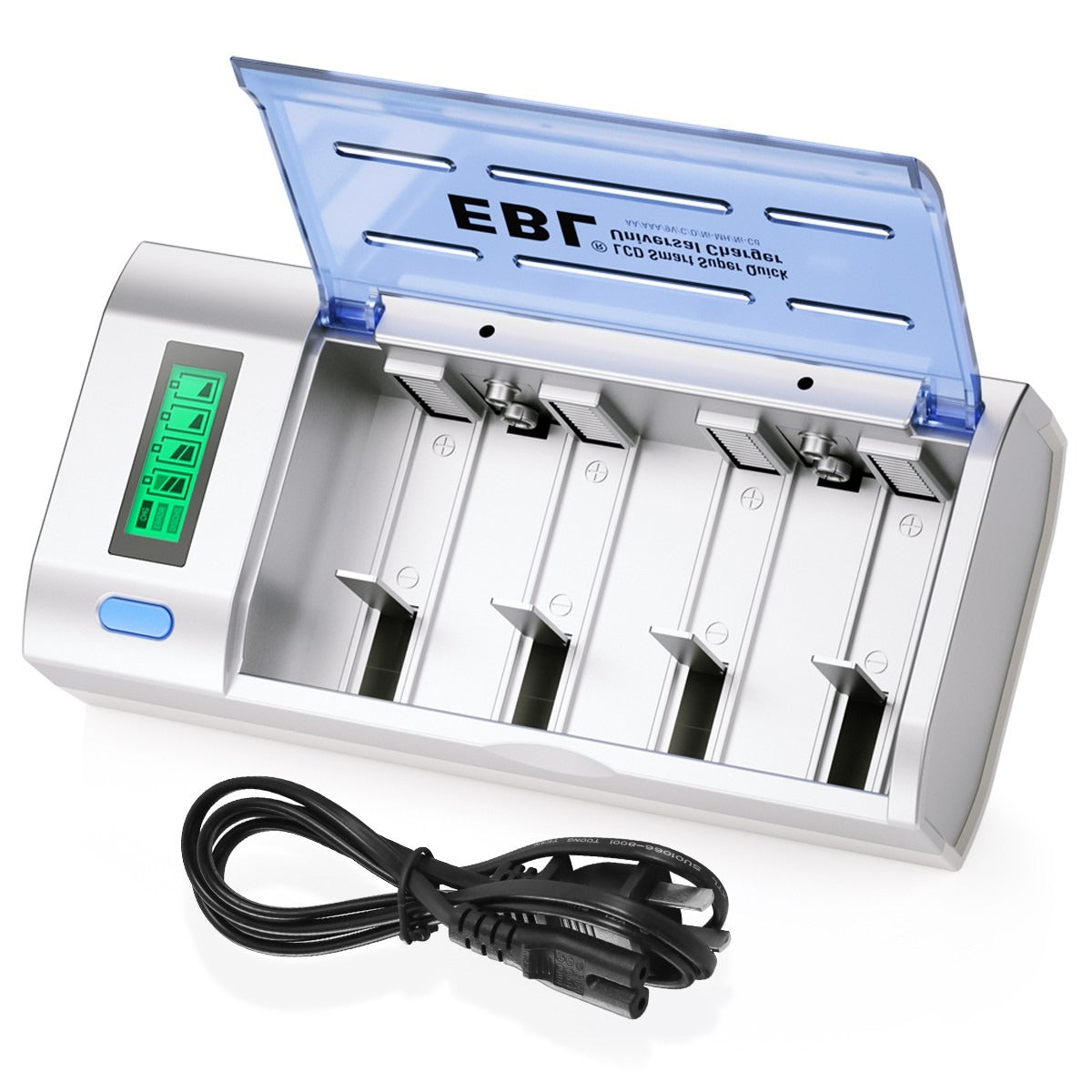
For rechargeable 1.5V lithium AA, use a charger approved for the exact battery model. A NiMH-only charger is unsuitable. Some chargers support both types, but their instructions must say so. Matching slot size or seeing “lithium-ion” on a charger is not enough to confirm compatibility.
Also check where the USB cable connects: USB-C may power the charging cradle rather than plug into each cell. Follow the supplied charging and temperature instructions. Do not charge damaged batteries or try to repair or dismantle them.
When Should You Consider an EBL Lithium AA Kit?
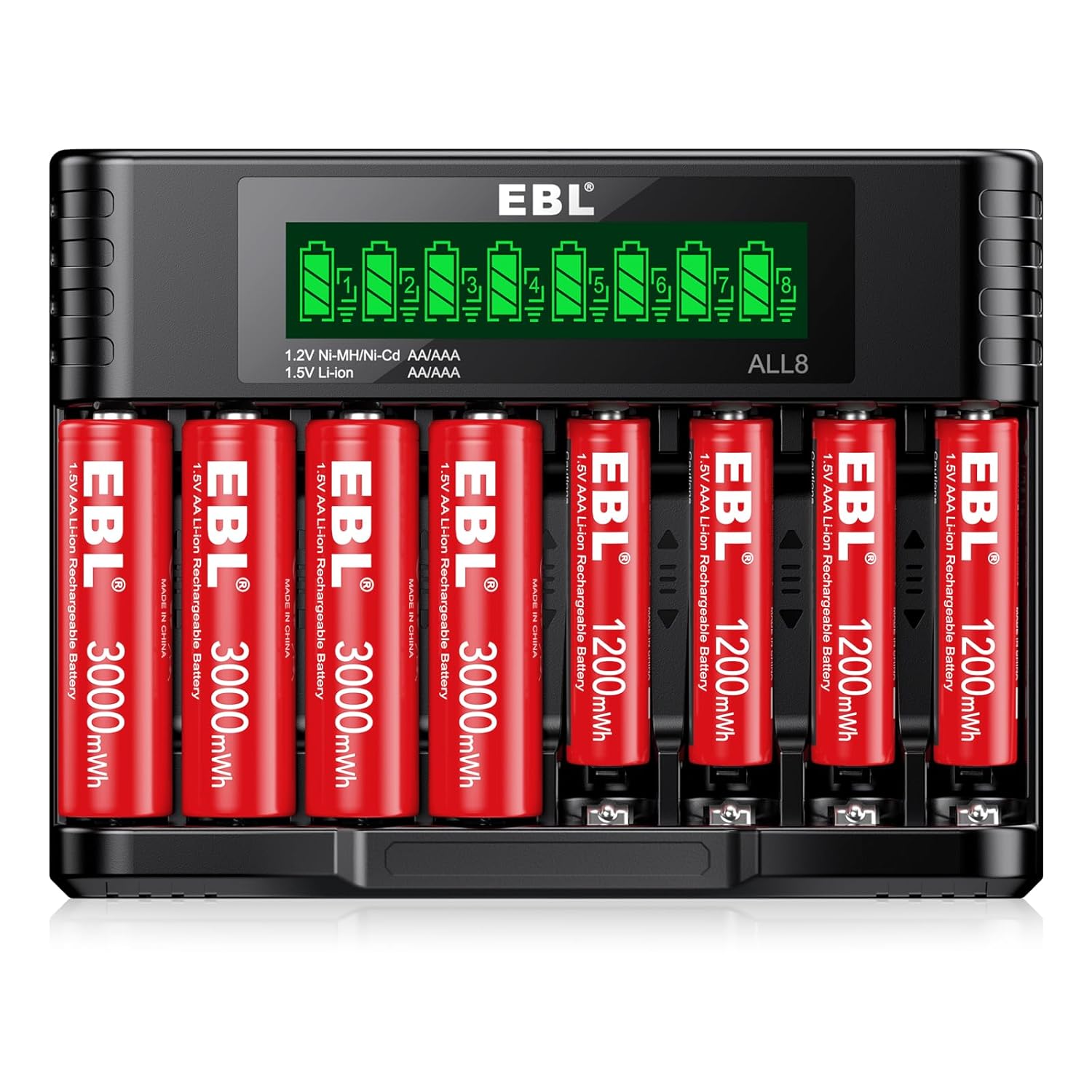
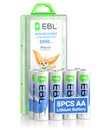
A lithium AA kit makes sense when your device permits rechargeable 1.5V lithium and you want the batteries and charger together. The EBL 8-AA lithium battery and charger kit is one option for that need. Choose the exact bundle and complete the checks below before ordering.
The 8AA (3000mWh) + Charger option, SKU MPCDQ8000AEB, includes eight rechargeable AA cells rated at 3000mWh each and a charger. The listing specifies 1.5V battery output and USB-C input on the charger.
Five checks before buying
- Device: the manual allows rechargeable 1.5V lithium AA.
- Fit: AA size and contacts match without forcing the battery.
- Power: the battery supports normal use and any startup demand.
- Charging: the charger supports the exact battery model.
- Label: check rechargeable status, capacity units, and pack quantity.
Need more help selecting a set? Read the rechargeable AA lithium buying guide.

Frequently Asked Questions
Are all lithium AA batteries rechargeable?
No. Some lithium AA batteries are single-use, while others are rechargeable lithium-ion designs. Both can be labeled 1.5V, so check for the word rechargeable and the charging instructions. Never put a non-rechargeable lithium battery in a charger, even if it fits the slots.
Can I mix lithium AA and NiMH AA batteries?
No. Use a matched set of the same battery type and model, with similar age and charge level. Mixing lithium and NiMH creates different electrical behavior within the same device. Replace or recharge the set together, following the manufacturer's instructions.
Can my device charge rechargeable AA batteries through USB?
Only if its instructions specifically support charging those AA batteries. A USB port may power the device without charging the installed cells. Some devices charge only a separate proprietary battery pack. If loose-cell charging is not supported, remove the batteries and use their compatible external charger.
Why does my battery indicator show the wrong charge level?
Some devices estimate remaining charge from battery voltage. Changing to a different chemistry can confuse that estimate: NiMH operates at a lower nominal voltage, while regulated lithium keeps its output steady. Check for a battery-type setting and follow any guidance about low-battery warnings.
Should I replace NiMH batteries that already work well?
Usually, there is no need to switch solely because lithium batteries say 1.5V. If your device accepts NiMH and gives you satisfactory runtime, another matched NiMH set can be a practical choice. Consider switching when you have a specific problem that an approved alternative can address.
Device compatibility confirmed? View the EBL eight-AA kit and included charger.


Leave a comment
All comments are moderated before being published.
This site is protected by hCaptcha and the hCaptcha Privacy Policy and Terms of Service apply.